
By Womaness Editors 4-Minute Read

It happens to the best of us (read: most of us, especially in midlife): Sometimes things feel a little off or just weird down there. So when you do notice something uncomfortable vaginally, how can you begin to understand what you’re actually experiencing—and when should you seek OTC treatment versus seeing you doctor?
For answers, we turned to Dr. Jila Senemar, a board-certified OB/GYN, certified menopause specialist, longevity physician, and founder of JilaMD, a concierge practice that provides personalized care with a focus on perimenopause, menopause, metabolic optimization, and more.
1. When a patient tells you she has “vaginal dryness,” what does she usually mean?
“’Dryness’ is the word women reach for because it’s the only one they’ve been given. When I ask follow-up questions, I hear burning. Itching. Rawness. A sandpaper feeling. Pain with sex. Tearing. Needing to pee more often.
Dryness is rarely one symptom. It’s a cluster. Clinically, much of it falls under genitourinary syndrome of menopause, or GSM: changes in the vulva, vagina, and bladder as estrogen declines.”
2. Are there symptoms women commonly assume are vaginal dryness that may actually point to another issue?
“Several conditions look like dryness but aren’t. Yeast and bacterial vaginosis. Contact irritation from soaps, wipes, pads, detergents, or lubricants. Skin conditions like lichen sclerosus, which causes itching and whitening of the vulvar skin and needs a diagnosis. Pelvic floor muscle tension, which causes pain with penetration. Recurrent UTIs. Less often, precancerous skin changes. A label is not a diagnosis.”
3. Conversely, are there symptoms women don’t realize can be related to vaginal dryness or changing vaginal tissue?
“Many symptoms come from changing tissue, and women rarely link them. Discomfort when sitting for long periods. Stinging when wiping. Chafing on a bike or during a run. Leggings and lace suddenly feel unbearable. A pelvic exam that hurts more than it used to. Urgency, frequency, or burning with urination when the culture comes back negative. Recurrent UTIs. The vagina and bladder share the same estrogen receptors. When one changes, so does the other.”
Vaginal Renewal Kit
$43.98 $30.79
SAVE 30%
4. How can vaginal dryness feel different from a yeast infection, UTI, irritation from a product, or another vaginal infection?
“There are clues. Dryness tends to build gradually, is worse with friction, and usually doesn’t change your discharge. Yeast usually brings intense itching and thick, white discharge. BV brings a thin discharge with a fishy odor. A UTI comes on fast, with burning, urgency, and sometimes blood. Product irritation flares after you use something new. But here’s the truth: these overlap, and they can coexist. Women misdiagnose themselves constantly, and repeated OTC yeast treatments can make irritation worse. If you’re guessing, get examined.”
5. What symptoms make you say, “This is worth coming in for an appointment rather than continuing to treat it at home”?
“Come in for any of these:
· Bleeding after menopause, after sex, or between periods
· New, unusual, or foul-smelling discharge
· Itching or burning that lasts more than a week or two, or keeps coming back
· Pain that is getting worse
· Urinary symptoms, fever, or pelvic or back pain
· Sores, lumps, or white or thickened patches of skin
· No improvement after a fair trial of OTC treatment
Postmenopausal bleeding always gets evaluated. No exceptions.”
6. If vaginal dryness really is the issue, when is an over-the-counter solution reasonable to try first?
“If your symptoms are mild, consistent with dryness, and come with none of the red flags above, an OTC moisturizer is a reasonable first step. Use it consistently, not just before sex. Give it four to eight weeks. If you’re not clearly better, or you need it more and more just to feel normal, come in. That’s your signal that the tissue needs more than moisture.”

Melt For You
$27.00 $18.90
SAVE 30%
7. What do you recommend a patient look for from an over-the-counter solution?
“Know the difference first. A lubricant reduces friction during sex. A vaginal moisturizer is used regularly to hydrate tissue. Most women need the second. What I look for:
· Hormone-free. Many of my patients can’t use hormones or don’t want to. Others are already on HRT and need more support. A good moisturizer should work in both cases.
· Hyaluronic acid. It binds water and helps the tissue hold onto moisture.
· Easy to use consistently. Results come from routine, not from occasional use.
· Clean formulation. Avoid fragrance, dyes, warming agents, and anything that stings thin tissue.
This is why I like Womaness Melt For You vaginal inserts. They are hormone-free and can be used alongside hormone therapy, and each insert contains 5mg of medical-grade hyaluronic acid. There’s no applicator and no plastic, and you use it every two to three days for ongoing hydration. Most women insert it at bedtime so it melts overnight, which makes it easy to keep up.
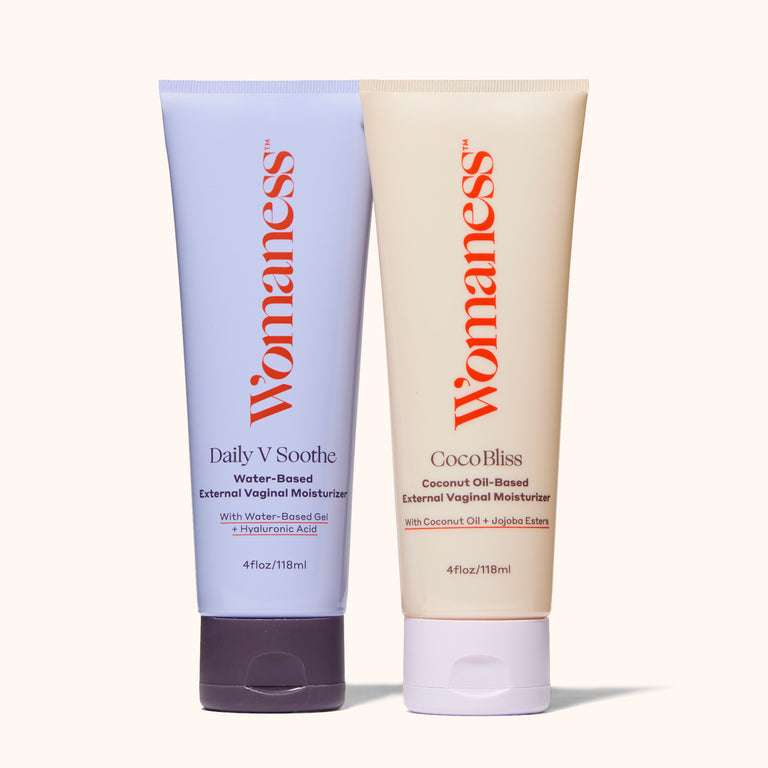
For women who prefer a gel or cream, a daily moisturizer like Daily V Soothe is another option.”
8. Lastly: Does vaginal dryness tend to resolve on its own once you hit menopause, or can vaginal tissue changes continue without treatment?
“No. This is the part women aren’t told. Hot flashes may fade. GSM doesn’t. It is chronic and progressive. Without treatment, tissue keeps thinning, the vagina can lose elasticity and length, and urinary symptoms and UTIs become more likely.
The good news is that it’s very treatable. Moisturizers help mild symptoms. Low-dose vaginal estrogen, DHEA, and other prescription options rebuild the tissue itself, and local vaginal estrogen is safe for most women.
Stop waiting for it to pass. Your comfort is not optional.”
More For You
What's Happening Here? Vaginal Dryness
Ask a Doctor: "Why Does Sex Hurt Now?"
What is Vaginal Skincare?


