By Womaness Editors 7-Minute Read

We've all been there. Standing in the skincare aisle or scrolling endlessly online, wondering whether that expensive serum is actually going to deliver the results it promises.
With countless creams, serums, and anti-aging products on the market, it's hard to know what's worth the investment. And when prescription skincare enters the conversation, the questions only multiply.
Is it really more effective? Is it worth the extra money? And what makes it different from the retinol products you've been using for years?
One ingredient worth getting to know is tretinoin (pronounced TRET-ih-noyn), a prescription-strength retinoid that has been studied for decades. Let's break down what it does, why dermatologists recommend it, and whether it's right for your skin—especially during perimenopause and menopause.
What exactly is tretinoin?
Think of tretinoin as retinol's more potent, prescription-only relative. Both ingredients belong to the retinoid family and are derived from vitamin A. But there's an important difference.
Over-the-counter retinol needs to go through a conversion process in your skin before it becomes retinoic acid, the form your skin can use. Tretinoin is already retinoic acid, which means it's ready to work without that conversion.
That's one reason tretinoin is considered a powerful treatment for certain skin concerns.
Originally developed to treat acne, tretinoin has also been extensively studied for improving visible signs of aging. And unlike many trendy skincare ingredients, it has decades of scientific research behind it.
What are the benefits of tretinoin?
Tretinoin isn't a miracle cream, but it has some impressive, research-backed benefits.
1. Helps reduce the appearance of fine lines and wrinkles
Tretinoin stimulates processes involved in collagen production and skin renewal. With consistent use, it can improve the appearance of fine lines, particularly those associated with sun damage.
2. Improves skin texture
As we age, our skin's natural renewal process slows. Tretinoin helps increase skin cell turnover, which can gradually improve roughness and uneven texture.
3. Helps fade certain dark spots
Sun exposure and hormonal changes can contribute to uneven pigmentation. Tretinoin may improve some types of discoloration, although stubborn pigmentation conditions like melasma may require additional treatments.
4. Treats acne and clogged pores
Yes, breakouts can still happen in your 40s and 50s! Tretinoin helps keep pores clear and is an established treatment for acne, including adult acne.
The best part? One ingredient can potentially address several common skin concerns at once.
“Originally developed to treat acne, tretinoin has also been extensively studied for improving visible signs of aging”
Why is tretinoin especially interesting during perimenopause and menopause?
Here's something we don't talk about nearly enough: the stages of menopause can change your skin just as significantly as it changes other parts of your body.
As estrogen levels decline, our skin experiences changes in collagen, hydration, elasticity, and thickness.
You might notice that your skin suddenly feels drier, fine lines are becoming more visible, or your once-reliable skincare routine isn't delivering the same results.
Sound familiar?
Tretinoin can be particularly useful because it addresses several visible skin concerns that become more noticeable during midlife, including fine lines, uneven texture, and some forms of discoloration.
But there's an important distinction: Tretinoin doesn't replace estrogen or reverse menopause-related hormonal changes. It works on specific skin processes, including cell turnover and collagen remodeling.
And because menopausal skin can be more prone to dryness and sensitivity, the right formulation and a gradual introduction are especially important.
Is tretinoin actually better than over-the-counter retinol?
This is probably the biggest question.
The short answer: Tretinoin has stronger clinical evidence for treating photoaging and is generally more potent, but that doesn't mean it's the better choice for everyone.
Over-the-counter retinol can still improve the appearance of skin over time, and its gentler formulations may be easier to tolerate.
Here's how they compare:
|
OTC Retinol |
Prescription Tretinoin |
|
|
Availability |
No prescription needed |
Prescription required |
|
Strength |
Varies by formulation |
Prescription-strength active retinoid |
|
Fine lines |
May improve appearance |
Strong evidence for improvement |
|
Acne |
Some formulations may help |
Established acne treatment |
|
Irritation |
Possible |
Often more pronounced |
|
Results |
Gradual |
Gradual, typically over months |
If your skin is sensitive or you're just starting with retinoids, an OTC retinol may be a good first step.
But if you're looking to address more noticeable fine lines, persistent acne, or sun-damaged skin, tretinoin may be worth discussing with a healthcare provider.
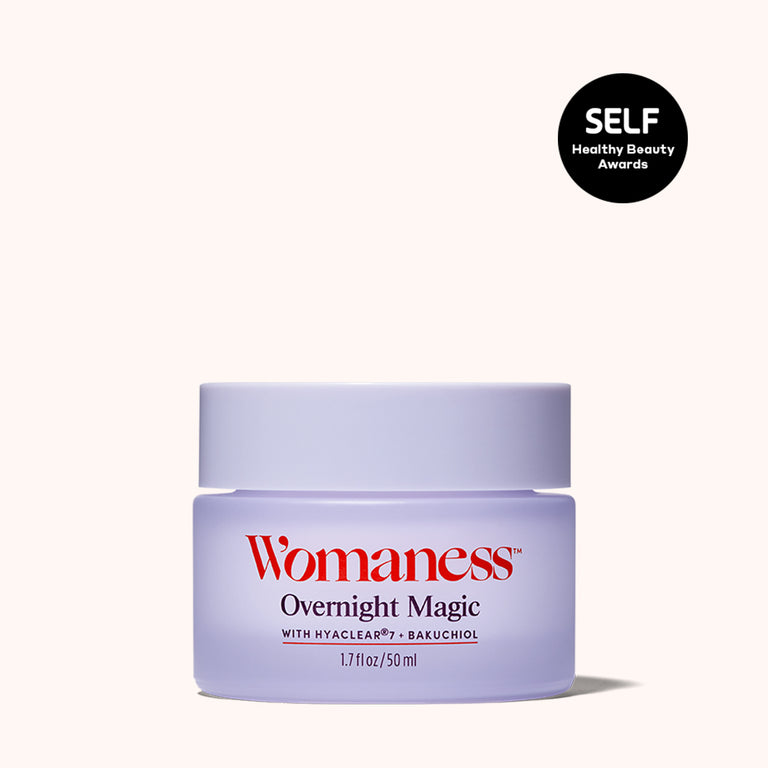
Overnight Magic
$29.99 $20.99
SAVE 30%
Can you use tretinoin with your regular Womaness skincare routine?
Absolutely. Prescription treatments don't have to replace every product on your bathroom shelf.
In fact, gentle cleansers, nourishing moisturizers, and hydrating ingredients can be especially helpful when you're using a retinoid.
Can you use tretinoin with Womaness Overnight Magic with bakuchiol?
Yes! You don't necessarily have to choose between prescription skincare and your favorite Womaness products. Womaness Overnight Magic contains bakuchiol, a plant-derived ingredient often called a retinol alternative, known for helping improve the appearance of fine lines, wrinkles, and uneven skin texture.
Unlike traditional retinol, bakuchiol is not a vitamin A derivative, and it can be incorporated into some routines that include prescription tretinoin. Together, they offer two approaches to supporting smoother, healthier-looking skin. Because tretinoin can cause dryness and sensitivity, we recommend introducing products gradually and checking with your healthcare provider before combining them. Using Overnight Magic on alternate nights is a good starting point. After all, midlife skincare isn't about choosing between your trusted favorites and new innovations—it's about finding the combination that works best for your skin.
A simple routine may include:
In the morning:
-
Cleanse with a gentle cleanse like Clean Slate
-
Apply a hydrating moisturizer like Overnight Magic
-
Finish with broad-spectrum SPF 30 or higher
In the evening:
-
Cleanse with a gentle cleanse like Clean Slate
-
Apply your prescribed tretinoin as directed
-
If recommended by your provider, follow with a moisturizer like Overnight Magic
Be careful about layering tretinoin with exfoliating acids, other retinoids, or potentially irritating active ingredients. Your provider can help you determine what works together.
And remember, the goal isn't to use as many active ingredients as possible. It's to create a routine your skin can tolerate consistently.
How much does tretinoin cost—and is it worth the money?
Here's some good news: Prescription skincare doesn't always mean luxury skincare prices.
Generic tretinoin can be relatively affordable, particularly when compared with some high-end anti-aging serums. A tube can also last for multiple weeks or months, depending on its size and your prescribed usage.
So, is it worth it?
Consider that tretinoin may help address multiple concerns—fine lines, texture, pigmentation, and acne—with a single treatment. For some women, that could mean simplifying their routine rather than continuing to purchase multiple specialty serums.
If you have specific skin concerns that tretinoin is proven to treat, it may be one of the more worthwhile investments in your skincare routine. But it's not essential for everyone, and expensive isn't necessarily better.

Clean Slate
$21.99 $15.39
SAVE 30%
How long does it take to see results from tretinoin?
Patience is key. Unlike a hydrating serum that can make your skin feel softer almost immediately, tretinoin works gradually.
You may notice changes in acne within several weeks, but improvements in fine lines and visible photoaging typically take longer. For some people, noticeable improvements may take three to six months of consistent use.
And here's the part worth knowing: During the first few weeks, your skin may actually look or feel worse before it gets better.
Dryness, peeling, redness, and irritation are common when first starting tretinoin. Some people treating acne also experience an initial worsening of breakouts. That's why starting gradually, following your provider's directions, and supporting your skin barrier are so important.
Is tretinoin right for everyone?
Not necessarily. Although tretinoin is well studied, it can cause irritation, dryness, and peeling, particularly during the adjustment period. Women with very sensitive skin, certain inflammatory skin conditions, or a compromised skin barrier may need a different approach.
Topical tretinoin should also be avoided during pregnancy or when planning to become pregnant. If you're breastfeeding, discuss its use with your healthcare provider. As always, the right treatment depends on your skin, your health history, and your individual goals.
More For You
Prescription Skincare Vs. Over-the-Counter Skincare
Why Your Old Face Cleanser Isn't Working Anymore
Ask an Esthetician: "Why Is SPF Extra Important for Menopausal Skin?"