By Womaness Editors 3-Minute Read

You moisturize your face without thinking twice. Same for your neck, hands, and dry elbows.
But vaginal skin—the most delicate tissue on your body? That’s often something you’re expected to just figure out (or in some cases, try to totally ignore!).
Vaginal dryness, irritation, discomfort or even pain during sex…none of it is unusual in this phase of life. As hormones shift, vaginal tissue can become thinner, less elastic, and less naturally lubricated.
This is where vaginal skincare comes in. (Yes, skincare. Yes, for your vagina.)
And one ingredient leading that conversation? Hyaluronic acid.
What Hyaluronic Acid Actually Does
Hyaluronic acid (HA) is a naturally occurring molecule found throughout your skin and connective tissue. Its specialty is hydration—binding water and helping skin maintain softness and flexibility.
You’ve seen it in facial serums and lotions for years. And for good reason.
But vaginal tissue is skin, too—highly specialized, estrogen-sensitive skin. As estrogen levels fluctuate, hydration levels can drop, and tissue can feel more delicate or reactive than it used to.
Hyaluronic acid works with your body, not against it—supporting moisture in a way that feels intuitive rather than aggressive.
What the Research Shows
Hyaluronic acid isn’t just a skincare favorite—it’s also been studied across multiple clinical trials and systematic reviews as a nonhormonal way to support vaginal hydration and comfort, particularly in postmenopausal women.
A randomized study published in Archives of Gynecology and Obstetrics found that women using hyaluronic acid vaginal tablets experienced significant improvement in dryness and discomfort. Another clinical trial found that both hyaluronic acid vaginal gel and low-dose estriol cream improved symptoms, each working through different mechanisms. And a systematic review published in Climacteric concluded that hyaluronic acid–based treatments generally improved vulvovaginal symptoms such as dryness, burning, itching, and pain during sex.
Results vary, as they always do—depending on the individual, the severity of symptoms, and the formulation used. But taken together, the research points to hyaluronic acid as a well-studied, well-tolerated option for supporting vaginal hydration and comfort.
In other words: this isn’t a trend pulled from the beauty aisle. It’s an ingredient with real clinical relevance for this part of the body.
“Hyaluronic acid isn’t just a skincare favorite—it’s also been studied across multiple clinical trials and systematic reviews as a nonhormonal way to support vaginal hydration and comfort, particularly in postmenopausal women.”
Vaginal Skincare Isn’t Just Lubricant
For a long time, women were given one category of product to address vaginal dryness: lubricant.
This is helpful, of course. But it’s not quite the entire picture. Lubricants are designed for the moment—they reduce friction during intimacy.
Vaginal moisturizers are designed for ongoing care. They support hydration and comfort on a more regular basis, whether or not sex is on the agenda. Same goes for vaginal inserts or suppositories.
That distinction matters. Because your needs don’t only show up in one moment.
Different Ways to Use Hyaluronic Acid
Hyaluronic acid can be incorporated into vaginal skincare in more than one way—and that’s a good thing.
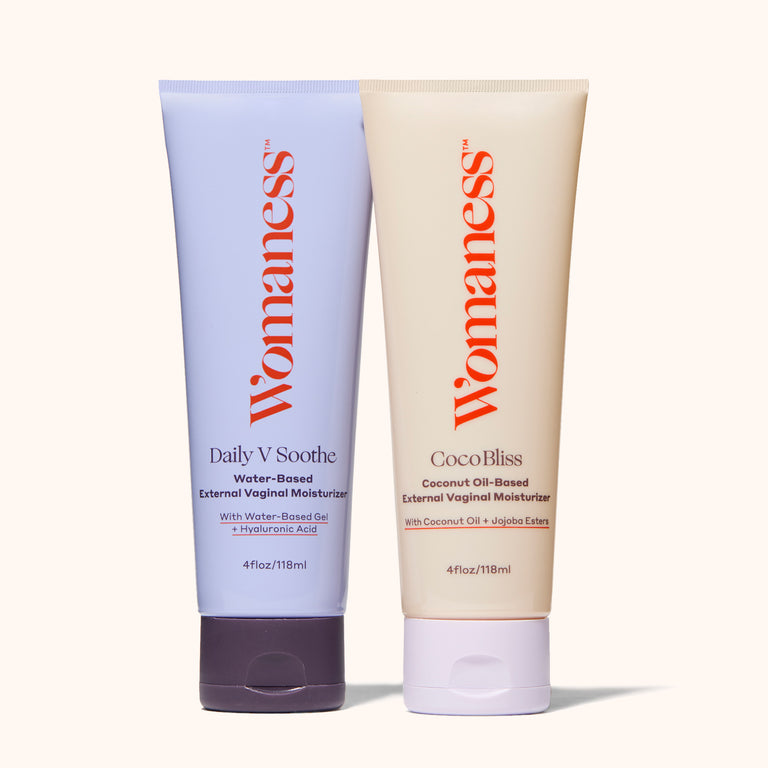
Daily V Soothe is a lightweight, hormone-free vaginal moisturizer designed for regular use. It delivers hydration via a water-based gel; you just apply a pea-size amount externally as needed (we recommend once a day and/or before intimacy). It’s simple, quick, and easy to make part of your routine.
Melt For You offers another format. These hyaluronic acid–based inserts are soft, solid suppositories that are placed vaginally, where they melt with body heat and gradually disperse. As they do, the formula coats the vaginal tissue before being naturally absorbed—no applicator required.
Some women prefer one format. Others like having both options, depending on their routine, comfort level, or what their body is asking for that day.
There’s no single “right” way to do vaginal skincare—just the way that works for you.

Melt For You
Why This Matters
We’ve spent decades being told—directly or indirectly—not to talk about this part of our bodies. Not to look too closely or to need anything.
And then things change…
At Womaness, we see vaginal dryness for what it is: a normal shift in your body. Not something to ignore, and definitely not something to be embarrassed about.
Hyaluronic acid is one of the most well-understood hydrating ingredients out there. Using it in vaginal skincare isn’t radical—it’s logical.
Because taking care of your vaginal skin should feel as normal as taking care of the rest of your skin. No drama. No stigma. No guessing games. Just solutions that make sense—for your body, your routine, and this phase of life.
More For You
What Is Vaginal Skincare?
Why UTIs Become More Common in Midlife
Ask a Sex Therapist: "What type of lubricant should I use?"